
Contour Farming Techniques in Hilly Terrains for Preventing Erosion and Water Loss
- Amey Nimkar
- Mar 24
- 5 min read
There’s a quiet moment every farmer in a hilly region knows too well: the rain begins, the soil loosens, and within minutes, years of fertility start slipping downhill. This is the hidden crisis of hilly terrain farming. Not drought. Not lack of effort. But the silent loss of topsoil and water with every rainfall. This is where contour farming techniques change everything.
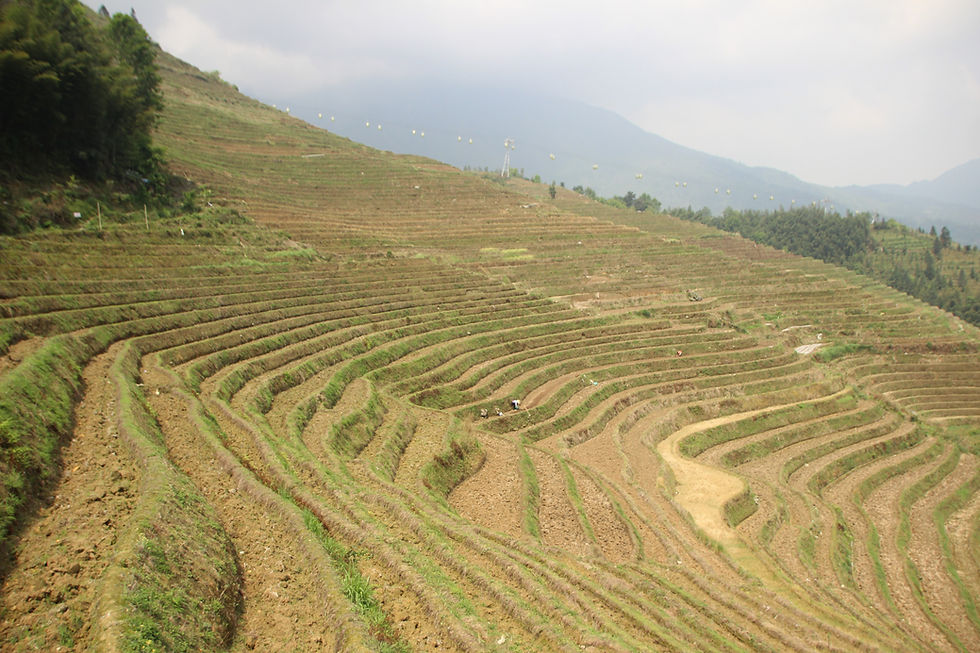
Instead of fighting the slope, this type of farming works with it. By planting crops along the natural curves of the land, it slows water, holds soil in place, and transforms vulnerability into strength. What looks like a simple shift in direction is, in reality, one of the most effective methods to prevent soil erosion and improve water conservation in farming. And in today’s climate-sensitive world, this isn’t just a technique; it’s a necessity.
What is contour farming, and why does it matter today?
Contour farming is the practice of planting crops along the natural contour lines of a slope rather than up and down the hill. These contour lines act like invisible guides, helping farmers align their fields with the land’s natural shape. But why does this matter?

Because water doesn’t fall straight, it flows. And on sloped land, that flow turns into force. Traditional farming methods accelerate this runoff, leading to severe soil erosion control challenges. Contour farming techniques interrupt this flow. It creates small ridges that act like natural barriers, reducing runoff speed and allowing water to seep into the soil. This makes it a cornerstone of sustainable agriculture, especially in regions where land degradation is a growing concern.
How does contour farming techniques reduce soil erosion so effectively?
The strength of the contour farming methods lies in its simplicity. When rainwater hits a slope, it gathers speed. That speed is what carries away topsoil, the most nutrient-rich layer critical for soil fertility management. With it, each row of crops becomes a checkpoint. Water slows down. Soil settles. Nutrients stay.
Studies show that contour farming methods can reduce soil erosion by over 50%, making it one of the most practical soil erosion control techniques available today. More importantly, it prevents the formation of gullies, those deep scars on farmland that are often irreversible. In essence, contour farming methods don't just reduce damage; it prevents it.
How does contour farming methods improve water conservation in farming?
In hilly regions, water is often abundant during rainfall, but scarce when crops actually need it. That’s the paradox. Contour farming for soil erosion control in hills solves this by turning runoff into stored moisture. The ridges formed along contour lines trap water, allowing it to slowly infiltrate the soil. This directly supports rainwater harvesting in agriculture, improving groundwater recharge and reducing dependency on irrigation.
Over time, this leads to:
Better moisture retention
Reduced water wastage
Extended growing seasons
For farmers, this means resilience. For crops, it means stability. And for the land, it means life.
What are the key benefits of contour farming for farmers?
The impact of contour farming for soil erosion control in hills goes far beyond just preventing soil loss.
Soil erosion control: By slowing runoff, it protects topsoil, ensuring long-term productivity.
Water conservation in farming: It enhances water infiltration, making every rainfall more valuable.
Crop yield improvement: With better moisture and nutrients, farms often see a 5–10% increase in yield.
Soil fertility management: Retained topsoil means richer, healthier land over time.
Sustainable agriculture: It reduces environmental stress while improving farm economics.
For farmers practicing farming techniques for slopes, this combination is powerful, it turns fragile land into productive ground.
What Are the Best Suited Types of Land?
Contour farming techniques work best on slopes between 2% and 10%, making it ideal for hilly terrain farming. On very steep slopes, additional support like terracing becomes necessary. On flat land, the benefits are minimal because runoff is already low.
The ideal conditions include:
Moderate slopes
Erosion-prone soils
Regions with heavy rainfall
Across India, especially in states with undulating terrain, contour farming methods are proving to be a reliable method to prevent soil erosion and stabilize production.
How are contour farming techniques implemented in real farm conditions?
Implementing contour technique in farming is both technical and intuitive. Farmers begin by identifying contour lines using simple tools like an A-frame or modern GPS systems. These lines guide the layout of the field. Next comes plowing and planting along these lines, forming natural ridges. These ridges act as barriers that slow water flow.
Maintenance is equally important. Over time, these structures need reinforcement to ensure continued soil erosion control. While the process requires planning, the long-term benefits far outweigh the effort.
How does terracing strengthen contour farming in steep areas?
When slopes become too steep, terracing takes contour farming a step further.
Terracing involves cutting the slope into flat steps, creating level surfaces that hold water and soil more effectively. When combined with contour technique, it creates a layered defense system against erosion.
This combination:
Enhances water conservation in farming
Improves land stability
Maximizes productivity on steep terrain
For farmers dealing with extreme slopes, terracing is not just an option, it’s an extension of contour technique in agriculture.
What other practices can enhance the results?
While contour farming techniques are powerful on its own, combining it with other practices makes it even more effective.
These include:
Strip cropping to reduce runoff impact
Cover crops to protect the soil surface
Mulching to retain moisture
Agroforestry for long-term sustainability
Together, these methods create a comprehensive approach to soil erosion control and strengthen the foundation of sustainable agriculture.
What challenges do farmers face with contour farming?
Like any technique, contour farming for soil erosion control in hills also comes with challenges. It requires:
Initial planning and labor
Knowledge of land contours
Regular maintenance
For small farmers, these can be barriers. However, with increasing access to training, tools, and agri-tech solutions, these challenges are becoming easier to manage. Over time, contour farming techniques prove to be more of an investment than a cost.
Why are contour farming techniques essential for sustainable agriculture?
The future of farming depends on how well we manage soil and water today. Contour farming techniques address both. It reduces land degradation, supports rainwater harvesting in agriculture, and strengthens resilience against climate variability. In the broader picture of sustainable agriculture, it plays a critical role in ensuring that productivity does not come at the cost of the environment.
How is contour farming methods shaping the future of hilly terrain farming?
As climate patterns shift and rainfall becomes unpredictable, contour farming techniques are gaining renewed importance. Modern tools like GPS mapping and data-driven planning are making it easier to implement. Agri-tech platforms are integrating farming techniques for slopes into scalable models. In this evolving landscape, contour farming methods are no longer just a traditional method, it is a modern solution.
How does Invade Agro support sustainable farming practices?
Organizations like IAG are working towards building technology-backed agricultural ecosystems that promote smarter farming practices. By focusing on efficiency, sustainability, and data-driven decisions, platforms like these help farmers adopt techniques such as contour farming more effectively.
What does the future hold for contour farming techniques in India?
India’s agricultural future will increasingly depend on methods that conserve resources while improving productivity. With rising awareness around soil fertility management and water conservation in farming, contour farming techniques are expected to see wider adoption, especially in hilly and semi-hilly regions. Government initiatives, combined with private sector innovation, are likely to accelerate this shift.
Takeaway…
At its core, contour farming techniques are about respect for the land, for water, and for the delicate balance that sustains agriculture. It reminds us that sometimes, the most powerful solutions are not about adding more, but about aligning better. In a world searching for sustainable answers, contour farming methods quietly offer one steady, effective, and deeply rooted in nature itself.


Comments